
Magnesium, glycine and GABA: the nutrition behind a calm horse
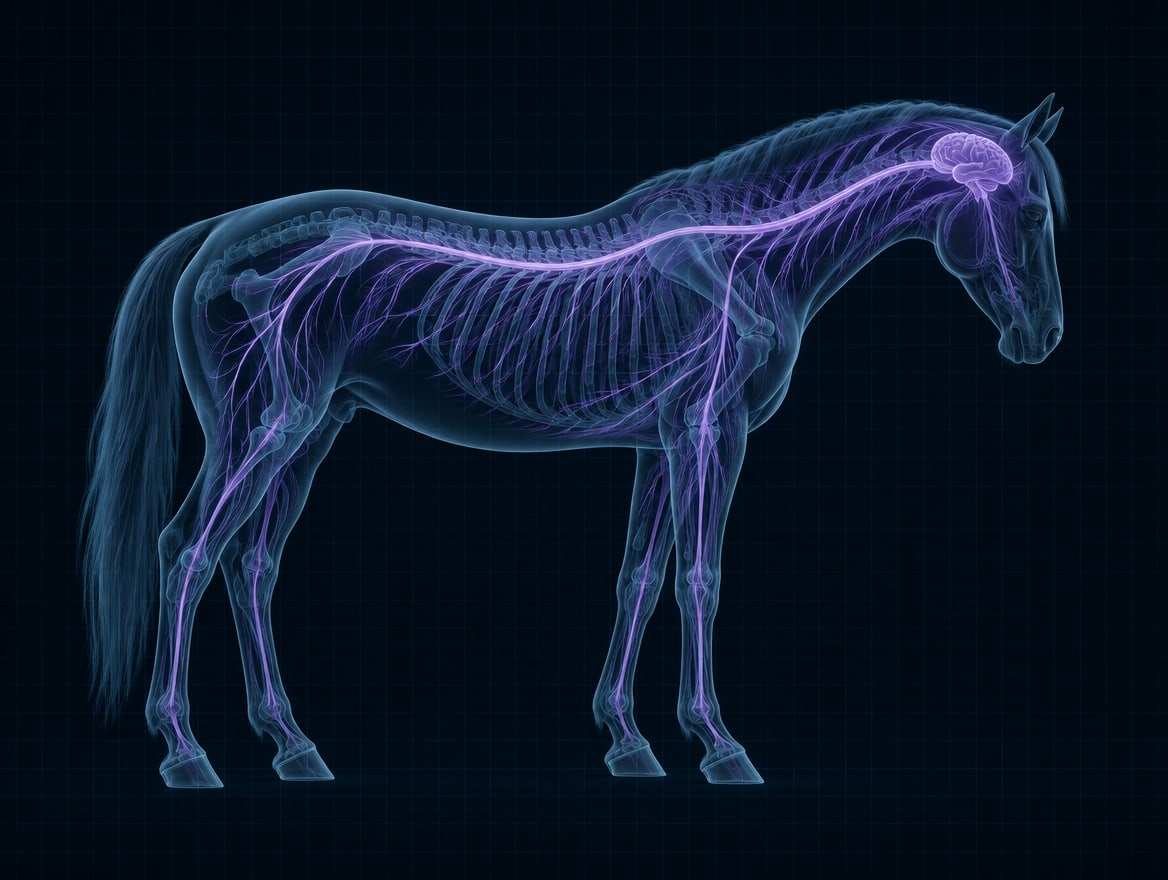
A horse that spooks, sweats in the trailer or boils over in the warm-up pen is often reacting through its nervous system before it has a chance to think. Training and handling matter most, but nutrition supplies the molecules nerves use to send and quieten signals.
The calming messengers
GABA, or gamma-aminobutyric acid, is the brain's main calming messenger. Nerve cells release it to dampen activity after they fire, balancing the signals that keep a horse alert. Glycine plays a similar role in the spinal cord and brainstem, where it is a key inhibitory messenger. Magnesium helps regulate nerve excitability and muscle contraction, and low magnesium is linked with nervousness and twitchy muscles in many species.
What horse studies have found
A study at Charles Sturt University fed magnesium aspartate to Standardbred geldings and measured how fast they reacted to a sudden stimulus. There was a trend toward slower, calmer reactions with added magnesium. A follow-up in a mixed group of ponies, Arabians and Thoroughbreds found the responses varied between horses and were not consistent. The takeaway is that magnesium can help some horses, and that it works best as one part of good management.
Where nutrition fits
Pacifier combines glycine with a magnesium and GABA ingredient for horses facing hauling, new arenas and busy show days. Pair it with consistent handling, turnout and forage. Check the rules of your discipline before competition use, as some governing bodies restrict GABA.
References
This article is general information about equine nutrition, not veterinary advice. Talk to your veterinarian about your own horse.

