
HMB for horses: what the research says about muscle fibres
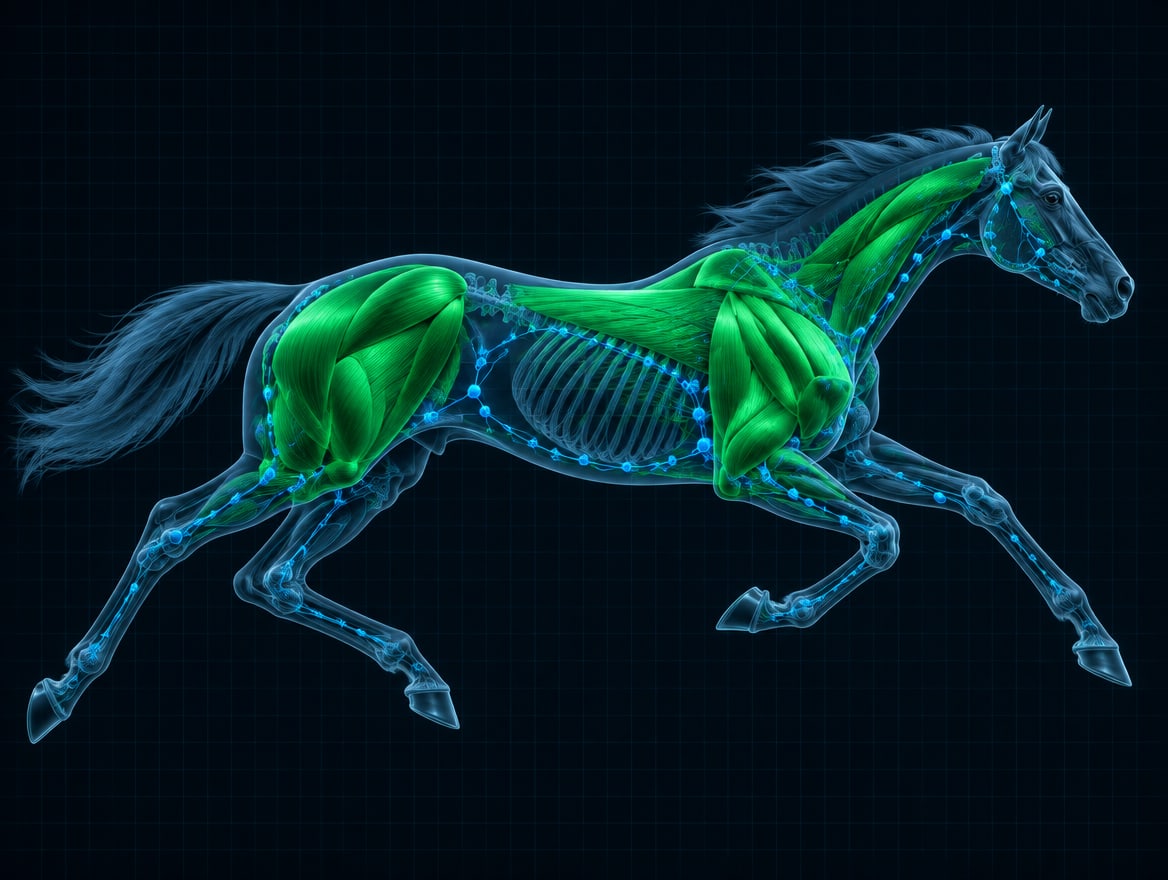
HMB, short for beta-hydroxy beta-methylbutyrate, is a compound the body makes in small amounts when it breaks down the amino acid leucine. It has been studied for years in people and livestock for its role in muscle protein balance, and it is now being studied in horses.
How HMB is thought to work
Muscle is always being built and broken down at the same time. HMB is thought to tip that balance by supporting protein synthesis and limiting breakdown during hard training. In cell studies it also acts on satellite cells, the stem cells muscle uses for repair and growth.
What horse studies have found
In a 2021 trial, Thoroughbred geldings were fed HMB or a control for six weeks before a standardised treadmill test. The HMB horses had a higher share of type IIA muscle fibres in the gluteus medius and fewer type IIX fibres. Type IIA fibres are fast but more resistant to fatigue. The study did not find a measurable change in performance or gait over that period.
A study of equine satellite cells showed HMB changed gene activity linked to muscle growth, while its authors noted that the overall role of HMB in horses still needs more research.
Where HMB fits
Race Condition includes HMB alongside BCAAs for daily conditioning. Sales Prep and Show Condition use it to support topline and muscle as horses are prepared for the sale ring and the show ring.
References
This article is general information about equine nutrition, not veterinary advice. Talk to your veterinarian about your own horse.


