
Coenzyme Q10 for horses: energy and antioxidant support in muscle
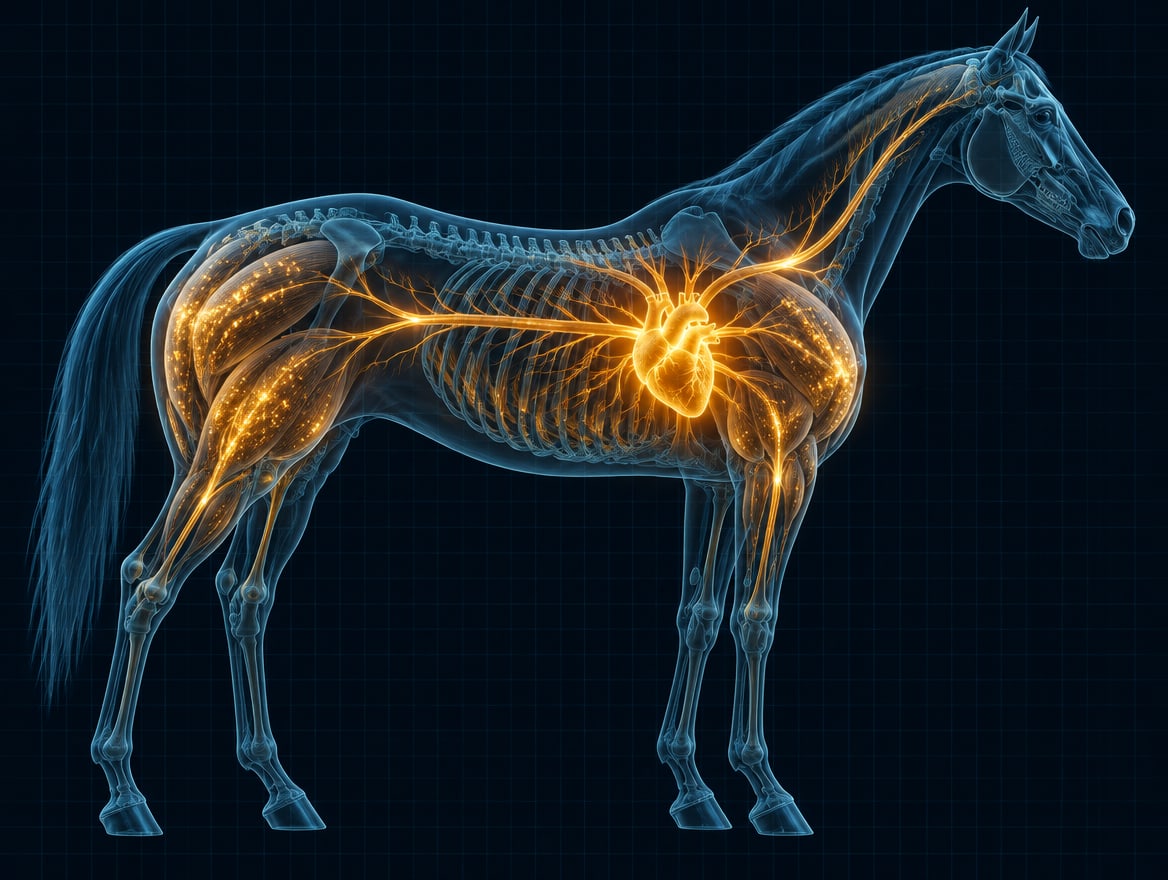
Every stride a horse takes is paid for with ATP, the energy currency of the cell. Most ATP in working muscle is made inside mitochondria, and coenzyme Q10 is one of the molecules that makes that possible. It passes electrons along the chain that produces ATP, which is why tissues with high energy needs, such as heart and skeletal muscle, are rich in it.
Two jobs in one molecule
CoQ10 also works as an antioxidant. Hard exercise increases the production of reactive oxygen species, unstable molecules that can damage cells if they build up. CoQ10 helps protect cell membranes from that damage and works alongside other defences such as glutathione.
What a horse study found
A study in fit Thoroughbreds tested a combination of N-acetyl cysteine and CoQ10 against a placebo. One hour after exercise, glutathione concentrations in muscle were significantly higher in the supplemented horses. Glutathione is the main antioxidant inside cells, so the result suggests the combination supported muscle antioxidant capacity around hard work. Because the two were given together, the study cannot say how much came from CoQ10 alone.
Where CoQ10 fits
Liquid Gold is built around coenzyme Q10, with beta-alanine, taurine and citrulline malate, for horses on demanding performance days. Equi Defence supplies NAC, the other half of the studied pairing, for everyday antioxidant and immune support.
References
This article is general information about equine nutrition, not veterinary advice. Talk to your veterinarian about your own horse.


