
Beta-alanine and carnosine: the buffer inside equine muscle
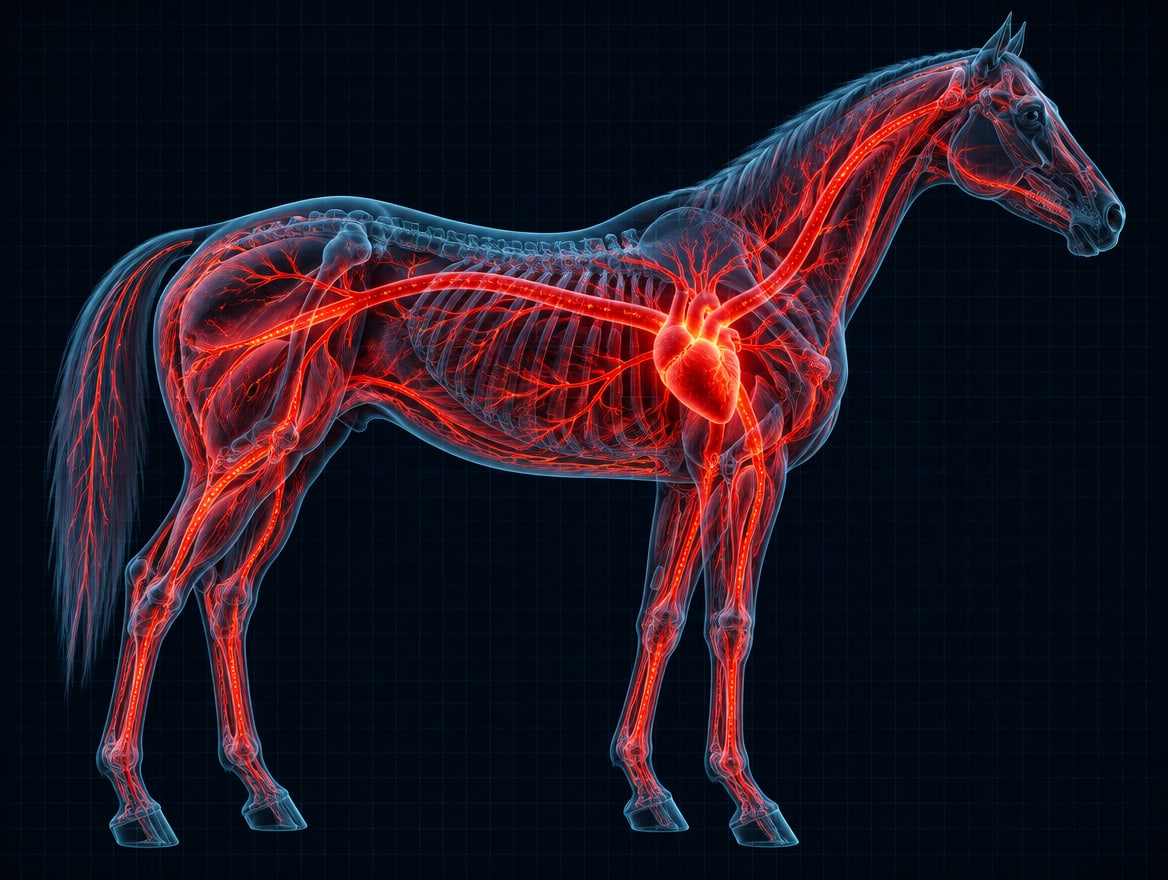
When a horse gallops hard, its muscles produce energy faster than oxygen can keep up. That process releases hydrogen ions, and the rising acidity is one of the things that makes muscle tire. Muscle defends itself with buffers, and one of the most important is carnosine.
Why horses are carnosine specialists
Carnosine is a small molecule made from two amino acids, beta-alanine and histidine. Horses carry far more of it in their fast-twitch muscle fibres than people do, which fits an animal built to sprint. The body makes carnosine inside muscle, and the amount it can make is limited mainly by how much beta-alanine is available.
What a horse study found
In a study of six Thoroughbreds, horses were fed beta-alanine with L-histidine three times a day for 30 days, and samples were taken from the gluteus medius muscle before and after. Muscle carnosine rose in several of the horses, and the size of each horse's change tracked closely with how much beta-alanine reached its blood. The authors concluded that changes in muscle carnosine appeared to depend on beta-alanine availability.
It was a small study, and it measured carnosine rather than race times. It does show that the pathway works in horses as it does in people.
Where beta-alanine fits
Liquid Gold, Pre Comp and Equi Charge all include beta-alanine alongside taurine. Because carnosine builds up over weeks, consistent feeding matters more than a single dose.
References
This article is general information about equine nutrition, not veterinary advice. Talk to your veterinarian about your own horse.


